

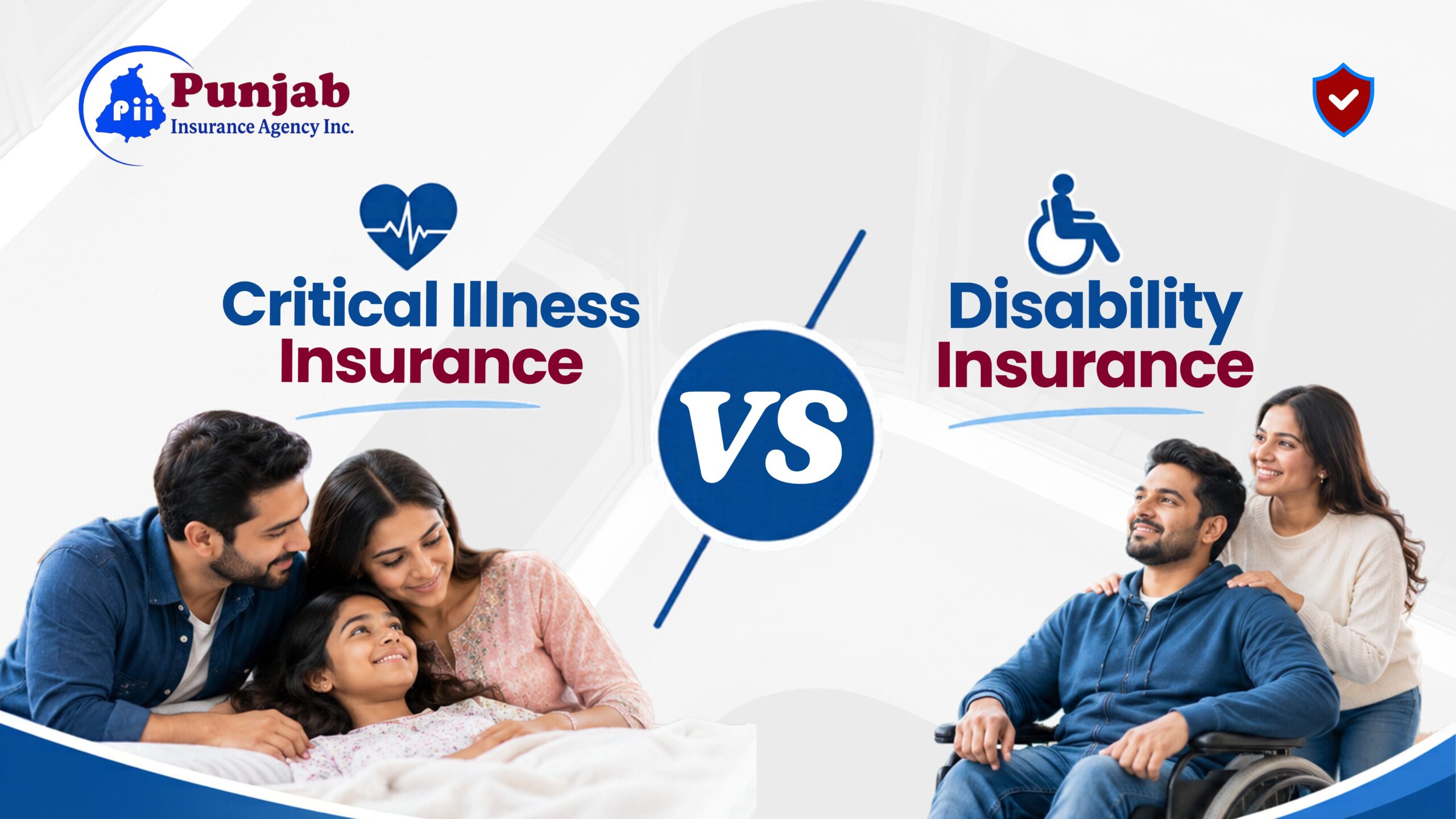

A serious illness or injury can change your financial situation in unexpected ways. You may need extra money for treatment and recovery, or you may be unable to work and earn your regular income.
Critical illness insurance and disability insurance can both provide financial protection, but they work differently. Understanding the difference can help you decide which type of coverage may be useful for your situation.
In this guide, we compare critical illness insurance vs. disability insurance, including how they pay benefits, what they cover, and when you might need them.
What Is Critical Illness Insurance?
Critical illness insurance provides a lump-sum benefit if you are diagnosed with a specified serious illness covered by your policy and meet its requirements.
The money is generally paid as a one-time amount after the insurer approves your claim. You can use it for various financial needs, rather than only for medical bills.
For example, if you receive a qualifying cancer diagnosis, an approved critical illness claim may help you pay your mortgage, manage household expenses, arrange childcare, or cover additional recovery costs.
However, the diagnosis must meet the definition in your contract. Not every illness, cancer type, or stage will necessarily qualify.
What Is Disability Insurance?
Disability insurance is designed to replace a portion of your income if an illness or injury prevents you from working and you meet the policy’s disability requirements.
Depending on your plan, you may receive regular benefit payments while you remain eligible. These payments can help you manage recurring expenses such as rent, groceries, utilities, and loan payments when your earnings are reduced or stop.
The insurer may assess your ability to work according to the policy’s definition of disability. Some plans focus on whether you can perform your own occupation, while others may use different work-capacity requirements after a specified period.
Benefits may also be subject to a waiting period, maximum payment period, and other conditions.
Critical Illness Insurance vs. Disability Insurance: Key Differences
| Feature | Critical Illness Insurance | Disability Insurance |
| Main purpose | Provides financial support after a qualifying serious illness | Helps replace income when a qualifying disability prevents you from working |
| Payment type | Usually a one-time lump sum | Usually regular income-replacement payments |
| Main trigger | Diagnosis of a covered illness that meets the policy definition | Inability to work as defined by the policy |
| How you use the money | Generally flexible, subject to policy terms | Helps replace lost income and manage living expenses |
| Work status | Eligibility does not generally depend on being unable to work | Ability to work is central to eligibility |
| Benefit duration | Usually one lump-sum payment for a qualifying claim | May continue for a specified period while you remain eligible |
| Common considerations | Covered conditions, medical definitions, exclusions, and survival requirements | Definition of disability, waiting period, benefit amount, and payment duration |
Exact terms vary between insurance companies and policies, so compare the contract details rather than relying on general descriptions alone.
Example: When Critical Illness Insurance May Help?
Suppose you have a critical illness policy with a $100,000 benefit. You receive a diagnosis that qualifies under the policy, meet all applicable requirements, and your claim is approved.
You may receive the policy’s lump-sum benefit. You could use the money to manage household bills, arrange additional care, reduce debt, or cover other expenses during recovery.
The benefit is generally based on the covered diagnosis, not on how much income you have lost. You should still check your contract for exclusions and any conditions attached to the payout.
Example: When Disability Insurance May Help?
Suppose you earn $5,000 per month and have disability insurance that replaces 60% of your eligible income, subject to the plan’s terms.
If you become unable to work because of a qualifying illness or injury, your monthly benefit could be approximately $3,000 before considering any policy adjustments, offsets, limits, or other conditions.
This example is illustrative only. Your actual benefit may differ, and payments may begin only after the applicable waiting period.
The purpose of disability insurance is to help maintain a source of income while you meet the policy’s disability requirements.
Can You Have Both Types of Insurance?
Yes, you may be able to purchase both critical illness insurance and disability insurance, subject to eligibility and the insurers’ requirements.
They can serve different financial purposes:
- Critical illness insurance can provide a lump sum following a qualifying diagnosis.
- Disability insurance can provide ongoing income replacement if you cannot work under the policy definition.
Consider a situation where you receive a serious diagnosis and need time away from work. If the diagnosis qualifies under your critical illness policy and your inability to work also meets the disability policy’s requirements, you may be eligible to claim under both policies.
Approval under one policy does not automatically guarantee approval under the other. Each insurer assesses claims according to its own contract.
Which Insurance Should You Choose?
The right option depends on the financial risk you want to manage.
Critical Illness Insurance May Suit You If:
- You want a lump sum to manage expenses after a covered diagnosis.
- You want additional funds for recovery-related costs.
- You have savings or other income sources but want extra financial support.
- You want flexibility in how you use a qualifying benefit.
Disability Insurance May Suit You If:
- Your household depends on your regular earnings.
- You would struggle to pay monthly expenses without your income.
- You want income replacement if an illness or injury prevents you from working.
- You need protection against a longer period without earnings.
If your budget allows, comparing both options may help you identify gaps in your financial protection.
What Should You Compare Before Making a Decision?
Before buying either policy, review these details:
- Monthly financial needs: Calculate the amount required to cover your essential expenses.
- Existing workplace coverage: Check what your employer already provides and whether it continues if you leave your job.
- Coverage amount: Estimate how much protection you may need.
- Waiting period: Find out how long you must wait before benefits can begin.
- Benefit duration: Check how long payments may continue under a disability policy.
- Covered conditions and exclusions: Understand what qualifies for a critical illness claim and what may be excluded.
- Affordability: Choose premiums that fit your budget without putting other financial priorities at risk.
These checks can help you understand what each policy offers and where additional protection may be useful.
Final Thoughts
Critical illness insurance and disability insurance address different financial risks. Critical illness insurance generally pays a lump sum after a qualifying diagnosis, while disability insurance generally replaces part of your income if you cannot work and meet the policy requirements.
Neither policy is automatically better for everyone. Your decision should depend on your income, savings, family responsibilities, existing benefits, and budget.
For help exploring your insurance options, visit Punjab Insurance Agency Inc. and speak with a licensed advisor about coverage that suits your needs.
Disclaimer: This article provides general information and is not a substitute for professional insurance or financial advice. Coverage, eligibility, exclusions, benefit amounts, and claim conditions vary by policy and insurer. Consult a licensed insurance advisor before making a decision.